From the Steppes to the Sultanate
The story begins in the 10th century near the Aral Sea, in the windswept grasslands of Central Asia. The Seljuks were a clan belonging to the Oghuz Turks, a confederation of nomadic tribes known for their equestrian skills and martial prowess. Led by their eponymous chief, Seljuk Beg, they converted to Sunni Islam, a pivotal decision that would soon grant them entry into the heart of the Muslim world.
At the time, the once-mighty Abbasid Caliphate in Baghdad was a shadow of its former self. The Caliph, the spiritual head of Sunni Islam, was a political puppet controlled by a Persian Shi’a dynasty, the Buyids. The eastern lands were dominated by another powerful dynasty, the Ghaznavids.
Under Seljuk’s grandsons, Tughril and Chaghri Beg, the Seljuk horsemen galloped into this fractured landscape. They were not just raiders; they were migrants and state-builders. In 1040, at the decisive Battle of Dandanaqan, the Seljuks shattered the Ghaznavid army, winning control of the vast region of Khorasan (modern-day Iran, Afghanistan, and Turkmenistan).
Their momentum was unstoppable. In 1055, Tughril Beg marched his army into Baghdad. He didn’t depose the Caliph; instead, he “liberated” him from the Shi’a Buyids. In a moment of profound political significance, the grateful Abbasid Caliph proclaimed Tughril as “Sultan” (from the Arabic word for “authority”). This established a new political framework in the Islamic world: the Caliph remained the spiritual leader, but the Seljuk Sultan now held the temporal, military, and political power. The Great Seljuk Empire was born.
The Battle That Changed the World: Manzikert
Under Tughril’s successor, the brilliant general Alp Arslan, the empire continued to expand. But its most fateful collision was with the great Christian power to the west: the Byzantine Empire.
In 1071, a massive Byzantine army led by Emperor Romanos IV Diogenes marched east to put a stop to Turkish raids into Anatolia (modern-day Turkey). Alp Arslan met him at the Battle of Manzikert. Through superior tactics and the element of surprise, the smaller Seljuk force utterly crushed the Byzantines and, in a shocking turn of events, captured the emperor himself.
Manzikert was more than just a battle; it was a geopolitical earthquake. The Byzantine defeat shattered their eastern defenses, throwing the gates of Anatolia wide open. Turkic tribes poured into the region, transforming it over the next centuries from a Greek-speaking, Christian heartland of Byzantium into the Turkish and Muslim land it is today. Horrified by this collapse and the Seljuk advance, the new Byzantine emperor pleaded with the Pope in Rome for military aid. This desperate plea would directly trigger the First Crusade in 1096, a conflict that would redefine Christian-Muslim relations for centuries.
Patrons of a Golden Age
While their military conquests were legendary, the Seljuks were not simply warriors. Once in power, they became extraordinary patrons of art, science, and learning, overseeing a cultural renaissance, particularly in Persia and Iraq.
Much of the credit goes to Nizam al-Mulk, the brilliant Persian vizier who served Alp Arslan and his son Malik-Shah I. He was the administrative genius who organized the sprawling state. He established a network of state-sponsored universities called madrasas, known as the “Nizamiyyas.” The most famous, in Baghdad, became a leading center for Sunni theology and law, designed to counter Shi’a influence and promote a unified Sunni identity across the empire.
Under Seljuk patronage:
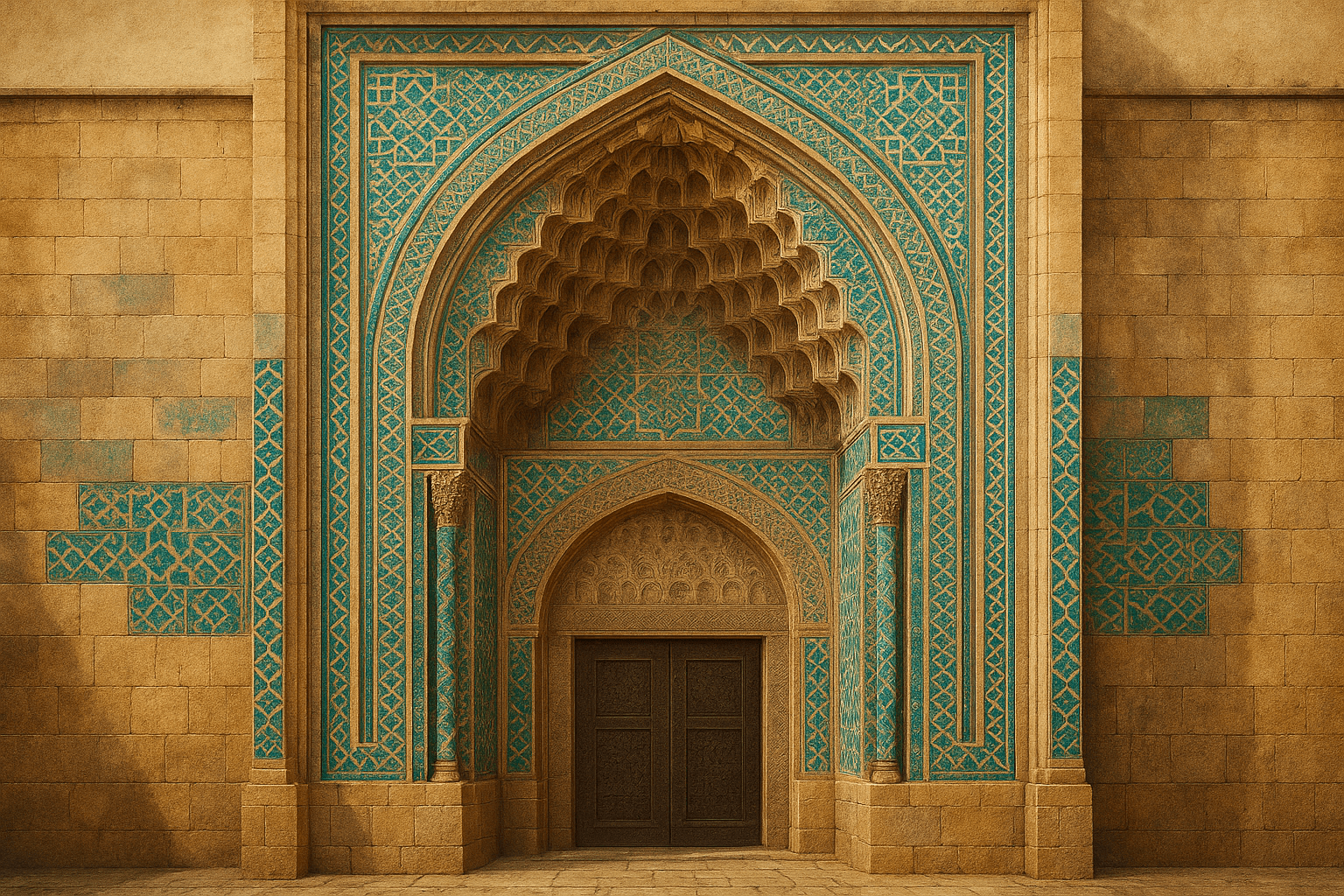
- Architecture flourished. The Seljuks blended their Turkic heritage with Persian artistic traditions, creating a distinct architectural style. They perfected the four-iwan (vaulted hall) mosque design, used intricate brickwork, glazed turquoise tiles, and developed the stunning muqarnas—complex, honeycomb-like vaulting that became a hallmark of Islamic architecture. The Great Mosque of Isfahan in Iran stands as a breathtaking monument to their vision.
- Science and poetry blossomed. The Seljuk courts sponsored some of the era’s greatest minds. The famous poet, mathematician, and astronomer Omar Khayyam worked at an observatory in Isfahan, where he helped create one of the most accurate calendars ever devised. The influential theologian and philosopher Al-Ghazali taught at Baghdad’s Nizamiyya, where he masterfully reconciled orthodox Sunni doctrine with Sufi mysticism.
The Seljuks were a Turkic dynasty that had adopted the Persian language for administration and culture, creating a unique Turco-Persian synthesis that would influence the region for centuries to come.
Fragmentation and Legacy
Like many empires forged by nomadic conquerors, the Great Seljuk Empire’s unity was fragile. The system of dividing territory among sons—a common Turkic practice—led to endless infighting and civil war upon the death of a strong ruler. The assassination of Nizam al-Mulk and the death of Sultan Malik-Shah I in 1092 marked the beginning of the end.
The empire quickly fractured into several successor states, including the Sultanate of Rum in Anatolia and various atabegs (governors) in Syria and Iraq. This disunity proved fatal. When the First Crusade arrived, the squabbling Seljuk princes were unable to mount a unified defense, allowing the Crusaders to capture Jerusalem.
The final blow came in the 13th century. The Mongol hordes under Genghis Khan and his successors swept through the region, extinguishing the last vestiges of Seljuk power. The Sultanate of Rum, the last major Seljuk state, became a Mongol vassal before disintegrating completely.
Yet, the Seljuk legacy was profound and enduring. They permanently established Turkic rule and settlement in the Middle East. They championed a Sunni revival that re-drew the religious map of Islam. They created the Sultanate as a political model that separated temporal and religious authority, a system later adopted by the Ottomans. And by conquering Anatolia, they not only set in motion the chain of events that led to the Crusades but also laid the groundwork for their ultimate successors. For it was out of the ashes of the Seljuk Sultanate of Rum that a small Turkic principality, led by a warrior named Osman, would rise to forge the next great world empire: the Ottomans.